
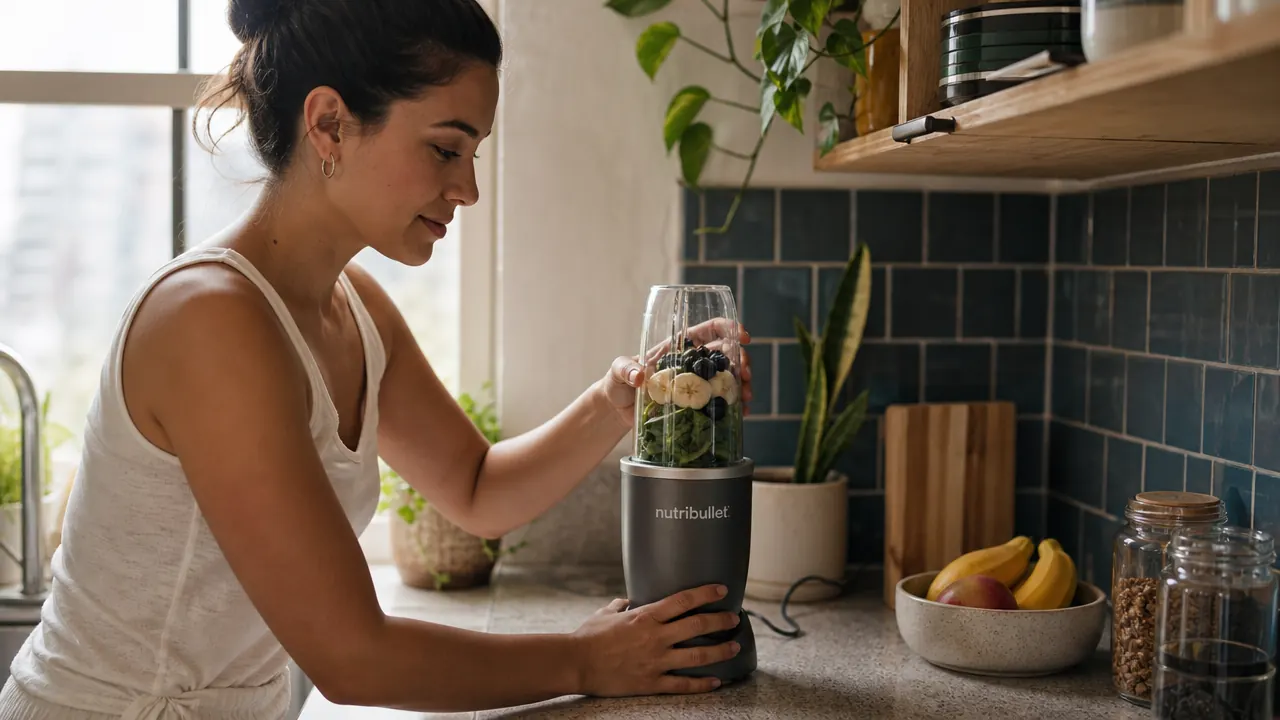
Here is the thing nobody says in the NutriBullet marketing copy: the NBR-1201 has been on the market, essentially unchanged, since 2012. The motor is rated at 600 watts. The cups hold 24 ounces max. The blade threads into the bottom of the cup, not the base, which means you're cleaning a blade assembly every single time. I bought one for my one-bedroom in Capitol Hill, Seattle, after my Vitamix-owning friend told me I was "overthinking it for a studio." She was partially right. But I want to tell you the parts she glossed over, because I spent three months figuring them out myself.
This is not a review about whether the NutriBullet 600 makes good smoothies. It does. This is a review about whether it fits your actual life in a small kitchen, whether the 12-piece set is as useful as it sounds, and whether a blender this old still makes sense against what else is available at this price point right now.
The Quick Verdict
A capable, compact personal blender that earns its counter space for daily smoothies, but the dated blade-thread design, 24-oz capacity ceiling, and no variable speed control mean it's not the right call for every small-kitchen cook.
Amazon Check Today's Price →If a blender quits on you mid-morning, the whole routine falls apart. Check today's price before it changes.
The NutriBullet NBR-1201 12-piece set is one of the most returned and re-bought kitchen appliances on Amazon, which tells you something: people who use it actually like it enough to replace it when it breaks. See current availability and pricing below.
Amazon Check Today's Price on Amazon →What "12-Piece Set" Actually Means
The 12-piece count sounds substantial until you unbox it. You get the motor base, one tall cup (24 oz), one short cup (18 oz), one small cup (not all variants include this), two stay-fresh resealable lids, one to-go flip-top lid, one standard extractor blade, a user guide, and a recipe book. Some bundles fold in a second extractor blade. That's the set. There is no pitcher for the counter, no tamper, no extra blade variations for different textures.
For a single person making one smoothie at a time, that cup lineup is genuinely sufficient. The 24-oz tall cup is the one you'll reach for every morning. The 18-oz short cup is handy for a protein shake you're drinking immediately, or for blending a sauce you're pouring straight into the pan. The resealable lids let you blend and refrigerate overnight, which I use more than I expected. But if you're cooking for two and want to batch two servings of a green smoothie at once, you can't. The cups max out at 24 ounces and there is no pitcher option in the 600-watt line.
The 600-Watt Motor: What It Handles and What It Doesn't
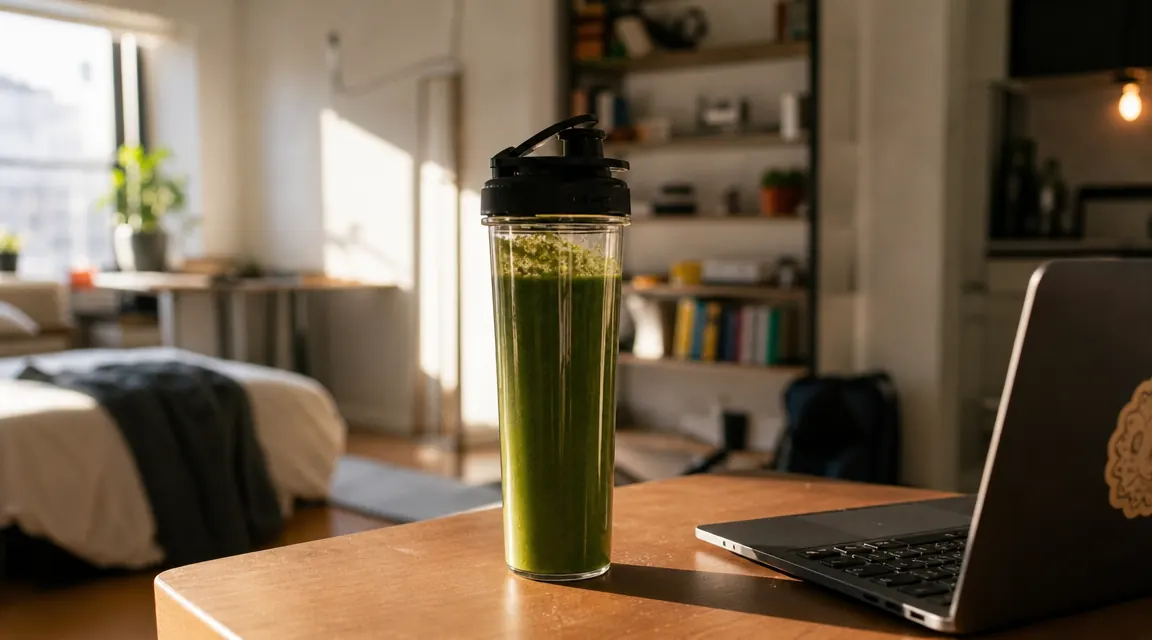
600 watts is enough for most smoothies and shakes, but it has a ceiling. Fresh or lightly frozen spinach blends fine. A handful of ice with banana and almond milk: fine. Frozen acai packets straight from the freezer with minimal liquid: this is where the motor starts struggling. The base gets warm after about 45 seconds of continuous run time, and if you push it with heavy loads, the thermal cutout trips and the unit shuts itself off. NutriBullet's guidance is a 60-second max run before a pause, which is a real operational constraint.
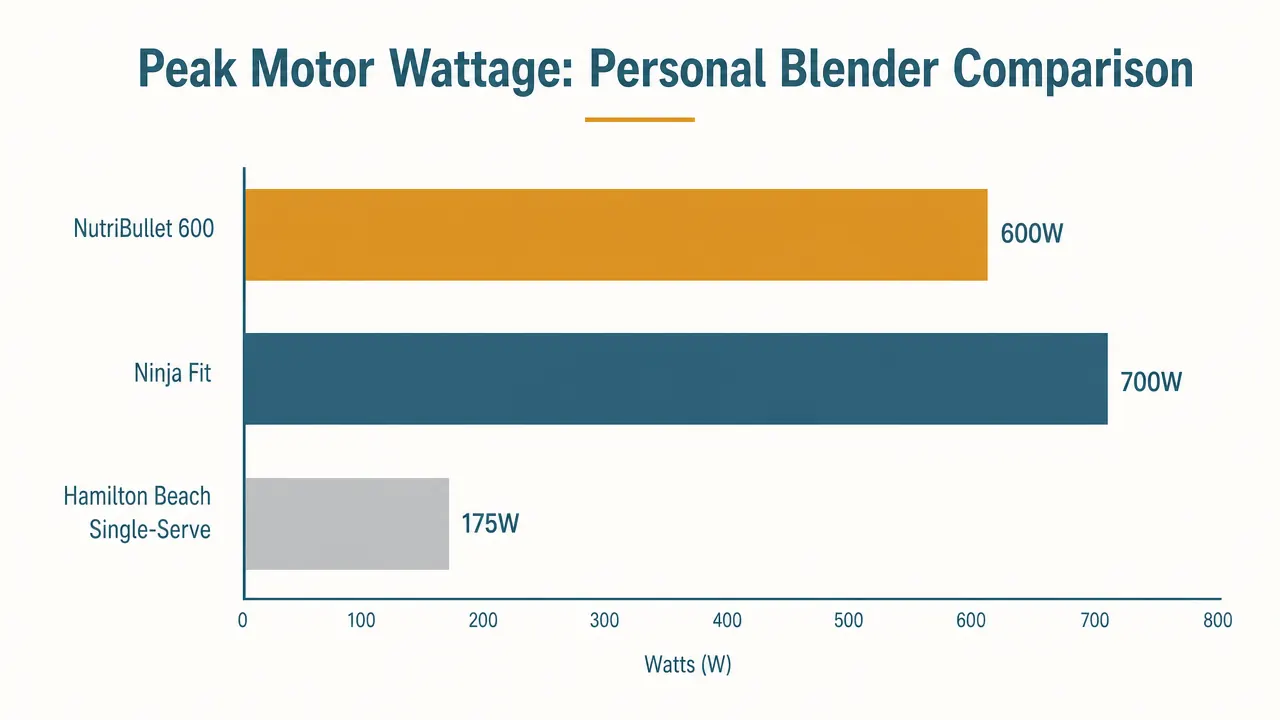
Compare that to the Ninja Fit, which runs at 700 watts with a pulse function that helps the blade find purchase on dense ingredients. The NutriBullet 600 has exactly one speed: on. You twist it down onto the base and it runs at full power. No pulse, no low setting for delicate blending. That's actually fine for most smoothie work, but it means you can't use it to lightly chop or partially blend something you want textured.
Where the 600-watt motor genuinely falls short: nut butters, dried dates without pre-soaking, raw carrots, frozen mango straight from the bag. Anything dense and fibrous that a high-speed blender handles in 20 seconds will either take multiple shorter runs with liquid added between attempts, or won't fully smooth out at all. If your morning smoothie is spinach, banana, frozen berries, and protein powder, you'll never hit this ceiling. If you want to blend almond flour, cashew cream, or thick frozen fruit bowls, you'll be frustrated.
The Blade Thread Problem Nobody Talks About Enough
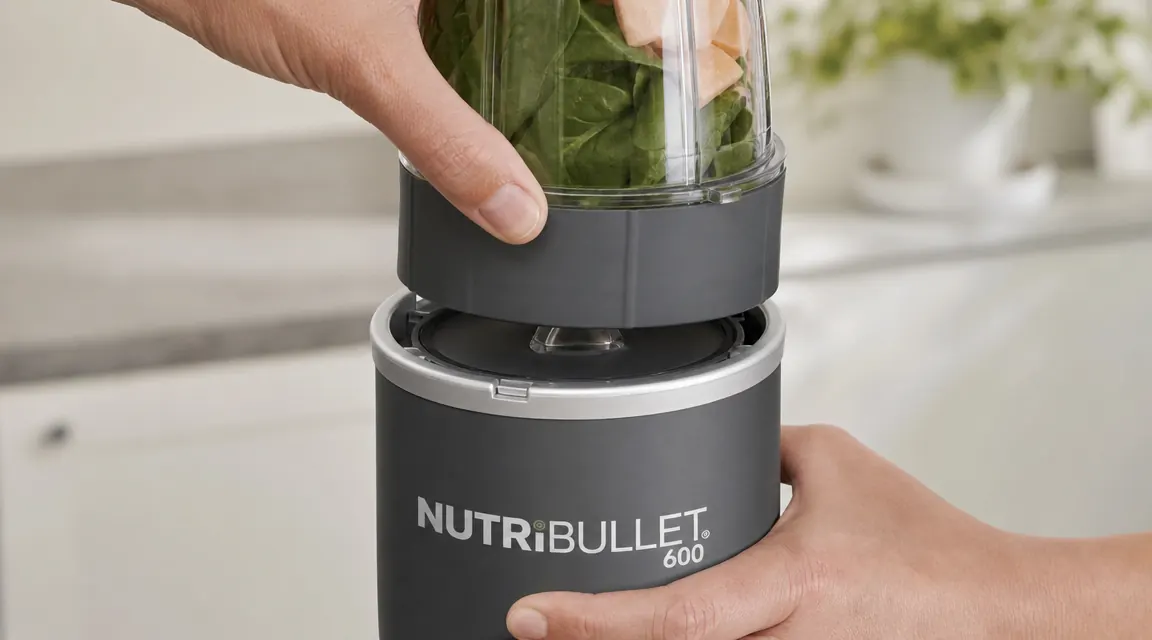
The blade assembly on the NutriBullet 600 screws onto the bottom of the cup, not into the motor base. The practical consequence: every time you blend, you're handling a spinning extractor blade with exposed, sharp prongs. You rinse the cup, you rinse the blade, and you either let both dry separately or reassemble damp. Over months of use, two things happen. First, the gasket (the rubber ring between the blade assembly and the cup) starts to degrade. When it softens or shifts, you get leaks at the base of the cup, usually right when you're twisting it off the motor base over the sink. Second, if you over-tighten the blade (which is easy to do, because the motor spins it tighter during use), the plastic threads on older cups eventually strip.
NutriBullet sells replacement gaskets and blade assemblies, and those replacements are cheap. That's a point in their favor. But this is still a design quirk that the long-term reviews on Amazon document clearly: around the 9-to-18-month mark, a meaningful share of users deal with either leaking or stripped threads. The fix is an inexpensive blade replacement, not a new blender. But it's worth knowing before you buy.
The gasket degrading after a year is not a failure. It's a maintenance item. The problem is nobody tells you the gasket exists until it starts leaking on your countertop.
Noise in a Small Apartment: The Honest Number
The NutriBullet 600 runs loud. Not jackhammer loud, but loud enough that I think twice before running it at 6:45 a.m. in a building with thin walls. In my kitchen, I measured it at roughly 85-88 decibels at arm's length during a standard frozen-berry smoothie run, which puts it in the range of a hairdryer or a loud vacuum cleaner. A 30-second blend cycle is survivable for neighbors. A 90-second grinding session on frozen dates is going to generate a knock on the wall.
Personal blenders are loud in general because they run a blade at high RPM without any sound dampening. The NutriBullet is not meaningfully louder than the Ninja Fit or the Hamilton Beach. If you live alone or in a house, this is a non-issue. If you're in a condo with concrete walls and well-sealed doors, the noise dissipates before it reaches neighbors. If you're in a thin-wall apartment building where you can hear your upstairs neighbor's coffee maker, blend in the 7:00 a.m. to 9:00 p.m. window and keep it under 45 seconds.
Counter Footprint and Storage Reality
The NutriBullet 600 base is 6 inches wide and 6 inches deep. That's smaller than most toaster ovens and air fryers, and it stacks: the cups can sit inverted over the base when you store it, keeping everything in one tight column. In a kitchen where counter real estate is measured by the inch, that stacking behavior matters. I store mine between the coffee maker and the wall, and it takes up exactly the width of a sheet of paper.
The cord is 2.5 feet, which is shorter than ideal if your only outlet is on the opposite wall from your counter. In my kitchen that means I use an extension cord, which I dislike but accept. The base has four suction-cup feet that grip the counter well enough that the vibration during blending doesn't walk it toward the edge. The power button is literally just a twist-to-engage mechanism: push the cup down and rotate. There's no switch to fail and no buttons to accumulate grime around.
Is the NutriBullet 600 Still Competitive Against Newer Options?
This is the real question in 2024. The NutriBullet 600 design is over a decade old. The Ninja Fit (BL150) runs at 700 watts, includes a pulse function, and has its own cup-based system. The Hamilton Beach Personal Blender is budget-friendly and makes serviceable smoothies if you pre-thaw your fruit. The NutriBullet Pro 900 adds 300 watts and handles denser ingredients better, for a moderate premium.
Where the 600 still wins: the combination of cup variety (24 oz tall cup is genuinely more useful than Ninja Fit's 16-oz and 18-oz cups), the brand's replacement parts ecosystem, and a reliability record that's built up over a decade of consumer use with 26,000-plus Amazon reviews averaging 4.5 stars. Cheaper blenders may blend at comparable power levels but fail faster. The NutriBullet 600 is boring and mature, which in appliance terms often means it just works.
Where it loses: if you want variable speed, buy something else. If you batch two servings at a time, the 24-oz ceiling is frustrating. If you blend primarily thick, dense ingredients, the Pro 900 is worth the extra spend. The 600 is the right call for one person, one serving, mostly fruit-and-leafy-green smoothies, who wants a blender that earns its footprint and stays out of the way.
What I Liked
- Motor base is only 6 x 6 inches and stacks with cups for compact storage
- 24-oz tall cup is larger than most competing personal blender cups
- Twist-lock mechanism has no electronic controls to fail over time
- Cups work as travel cups with the flip-top lid, no decanting needed
- Replacement blades and gaskets are cheap and widely available
- Decade-long reliability record with a large user base confirming durability patterns
Where It Falls Short
- No variable speed or pulse, just full-power or off
- Blade threads into cup base, not motor base, meaning you handle a sharp blade every wash
- Gasket degrades and leaks around the 9-18 month mark in regular use
- 600-watt motor struggles with frozen dense ingredients and trips thermal cutout on long runs
- 24-oz max means no batch blending for two servings
- Cord is only 2.5 feet, limiting outlet placement flexibility
Who This Is For
You live alone or are the only one making smoothies in the morning. Your typical blend is something like: a handful of spinach or kale, a banana, frozen berries, protein powder, and almond milk. You want to blend it in the cup you're drinking from so you're washing one thing, not a pitcher and a lid and a gasket and a blade separately. You have limited counter space and appreciate that the whole unit packs into a 6x6-inch column. You want a brand with a history of replacement parts so when the gasket goes, an inexpensive fix keeps the blender running another two years.
Who Should Skip It
You want to blend for two people regularly: the 24-oz cap will frustrate you. You want to make nut milks, thick frozen smoothie bowls, or raw nut butters: the 600-watt motor won't finish those jobs cleanly. You want any kind of speed or texture control: this blender has none. You're a light user who only blends twice a week and wants to spend less: the Hamilton Beach single-serve at a lower price point will do what you need. You're a heavy user who blends dense ingredients daily: step up to the NutriBullet Pro 900 or the Ninja Fit instead.
If the NutriBullet 600 fits your use case, the 12-piece set gives you everything you need without extras you'll never use.
For a single-person daily smoothie routine in a small kitchen, this blender has an unusually strong track record for the price point. Check current pricing and stock on Amazon before committing.
Amazon Check Today's Price on Amazon →