If your counter is narrow enough that you measure it before ordering anything, you already know the problem with most blender comparisons. They talk about horsepower and pitcher volume without ever mentioning that the thing is going to live between your toaster and your paper towel holder. The NutriBullet NBR-1201 600-watt system and the Ninja Fit are the two most-recommended compact personal blenders in apartments right now. Both are small. Both are budget-friendly. Both blend frozen fruit without complaint. But they behave differently in ways that actually matter in a tight kitchen, and one of them earns its footprint more convincingly than the other.
Short answer: the NutriBullet 600 is the better daily-use machine for most small-kitchen cooks. It blends faster, the cup system is cleaner and more flexible, and the 12-piece set gives you enough cups that you are not washing between every use. The Ninja Fit costs less and wins on a few specific use cases, but the NutriBullet is the one you will still want to use six months from now.
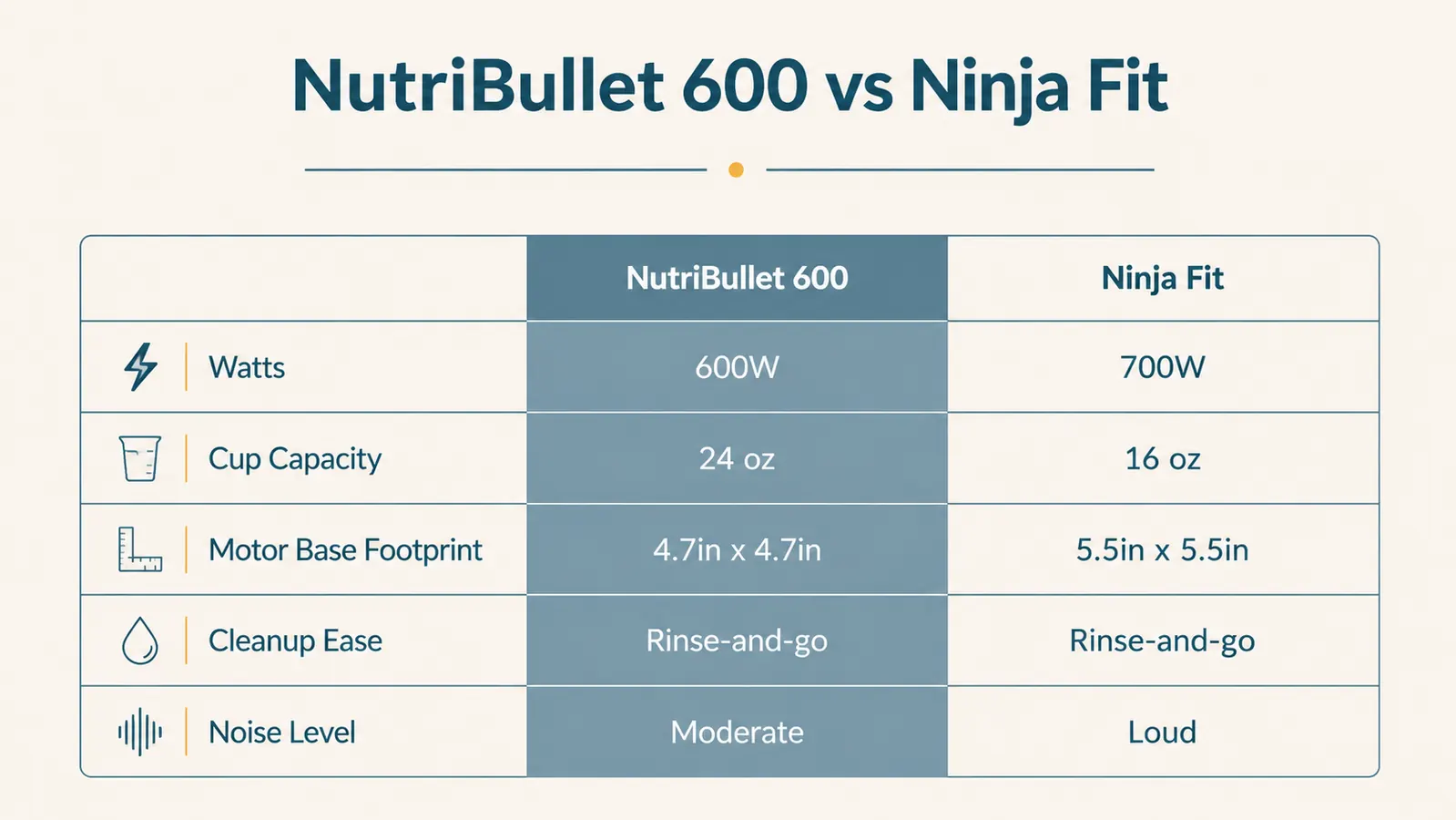
| Feature | NutriBullet 600 (NBR-1201) | Ninja Fit (QB3001SS) |
|---|---|---|
| Motor wattage | 600 W | 700 W |
| Cup capacity (main) | 24 oz | 16 oz |
| Motor base footprint | 4.7 in x 4.7 in | 5.5 in x 5.5 in |
| Cups included | 3 (24 oz x2, 18 oz x1) | 2 (16 oz x2) |
| Blade removal | Fixed blade on cup | Fixed blade on cup |
| Seal lids included | 3 flip-top lids | 2 sip lids |
| Noise level (approx) | Moderate | Loud |
| Cleanup method | Rinse-and-go or dishwasher | Rinse-and-go or dishwasher |
| Price range | Mid range | Budget |
| Warranty | 1 year | 1 year |
Where the NutriBullet 600 Wins
The cup system is the biggest practical difference between these two machines. The NutriBullet 600 comes with three cups: two 24-ounce tall cups and one 18-ounce short cup, plus matching flip-top lids. That means you can blend Monday morning's smoothie, seal it, put it in the fridge, and blend Tuesday's without running the dishwasher in between. For a one-person household in a studio apartment, that cup inventory is genuinely useful. The Ninja Fit gives you two 16-ounce cups, which is enough but leaves no slack. Run one and you are washing before the next blend.
The motor base footprint is also smaller than it looks in photos. The NutriBullet base sits on a 4.7-by-4.7-inch square. That is narrower than most single-serve coffee makers. It can live in a corner, behind a dish rack, or on a narrow shelf without crowding anything. The whole assembled unit with a tall cup is only about 13 inches high, which clears standard upper cabinets. If you have 5 inches of horizontal space and 14 inches of vertical clearance, it fits. Most small kitchens have that.
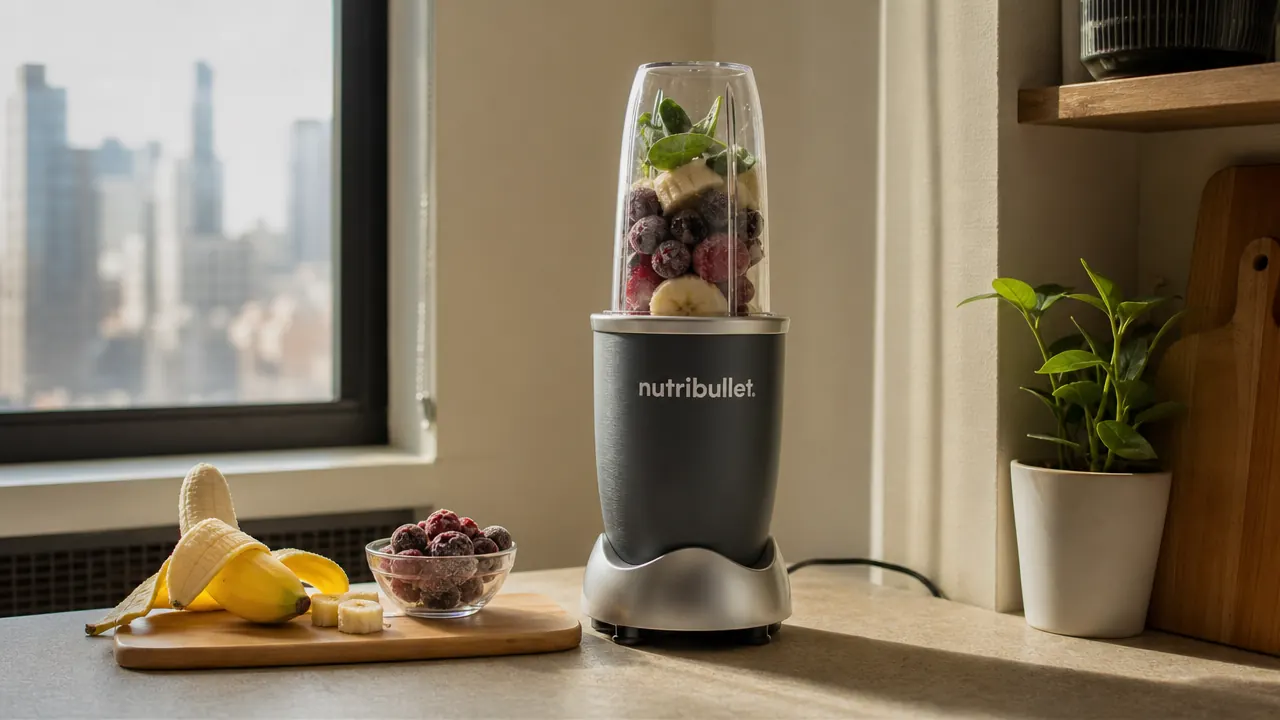
Blending performance on daily tasks, frozen fruit, spinach, and protein powder with milk, is consistent and fast. The 600-watt motor handles a frozen banana and a handful of frozen berries in about 25 to 30 seconds without stopping. Spinach incorporates cleanly without leaving leaf shreds. For protein powder, a 20-second blend with cold water or milk leaves no clumps. This is not a high-performance blender for nut butters or whole ice cubes, and it is not trying to be. For what most apartment cooks actually make in the morning, it does the job without drama.
The small-kitchen blender that earns every square inch of counter space it takes up
The NutriBullet 600 NBR-1201 12-piece set includes three cups, three lids, a short cup for smaller batches, and a 600-watt motor base with a 4.7-inch footprint. Check current pricing on Amazon.
Amazon Check Today's Price on Amazon →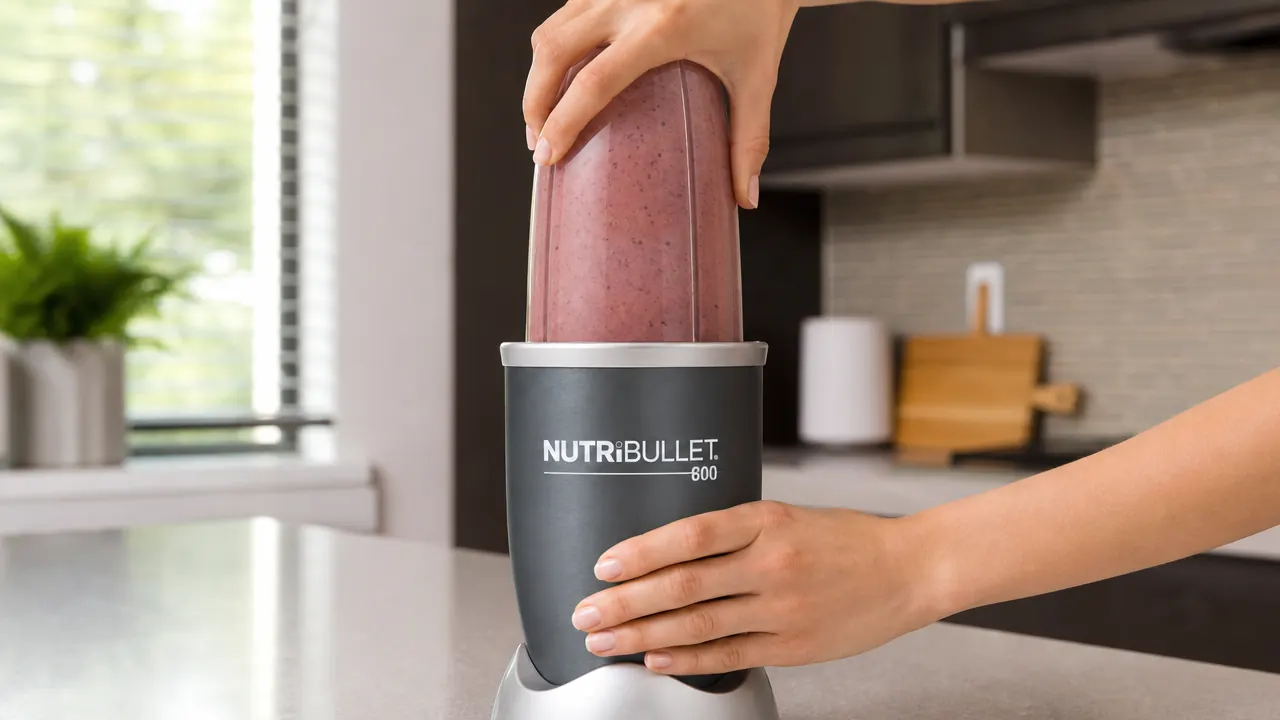
Where the Ninja Fit Wins
The Ninja Fit has a higher rated motor at 700 watts, and you can feel it on tougher loads. A frozen mango cube that makes the NutriBullet stutter a little goes through the Ninja without hesitation. If you are making thick smoothies with mostly frozen fruit and very little liquid, or if you regularly blend anything fibrous like kale stems, the extra 100 watts is real. The Ninja also handles ice better for anyone who wants crushed-ice drinks rather than smoothies.
Price is the other place the Ninja wins clearly. It typically runs below the NutriBullet 600 set. For a dorm kitchen where the blender gets used twice a week for a protein shake, or for someone who already has a cup they like and just needs the machine, the Ninja Fit is a sensible choice. It is not a worse blender on a watts-per-dollar basis. The tradeoffs are the smaller cup size, louder operation, and the more limited cup inventory. If those tradeoffs do not matter in your situation, the Ninja Fit is a legitimate option.
The NutriBullet base sits on a 4.7-by-4.7-inch square. That is narrower than most single-serve coffee makers. If you have 5 inches of horizontal space and 14 inches of vertical clearance, it fits.
Motor Base and Storage: The Number That Actually Matters
Here is a measurement exercise worth doing before you decide: put a 4.7-inch square piece of paper on your counter where the blender will live. Now put a 5.5-inch square piece of paper in the same spot. The difference looks small in product photos and feels larger in person when the thing that shrinks is the gap between your blender and your coffee maker. Both units store with the cup inverted on the base, which cuts the vertical height down to about 7 inches in storage position. That matters in apartments where counters sit under cabinets with only 10 to 12 inches of clearance.
The NutriBullet wins on footprint. The Ninja Fit is a slightly wider base, and the weight difference is negligible for both. Neither machine vibrates enough to walk across the counter during a normal blend cycle. Both have rubber feet that grip a tile or laminate surface without slipping.
Noise: The Apartment Reality Check
Both of these blenders are louder than the product listings suggest. Personal blenders at this price point run somewhere between 85 and 95 decibels in a normal kitchen, which is about the level of a loud conversation or a garbage disposal. You will not be blending at 6 a.m. without waking up a partner sleeping in the next room. The Ninja Fit is the louder of the two by a noticeable margin, particularly on frozen loads. The NutriBullet is not quiet, but it is quieter than the Ninja, and it finishes the blend faster which means less total noise exposure. For anyone in a studio with thin walls or a sleeping infant, that is not a trivial difference.
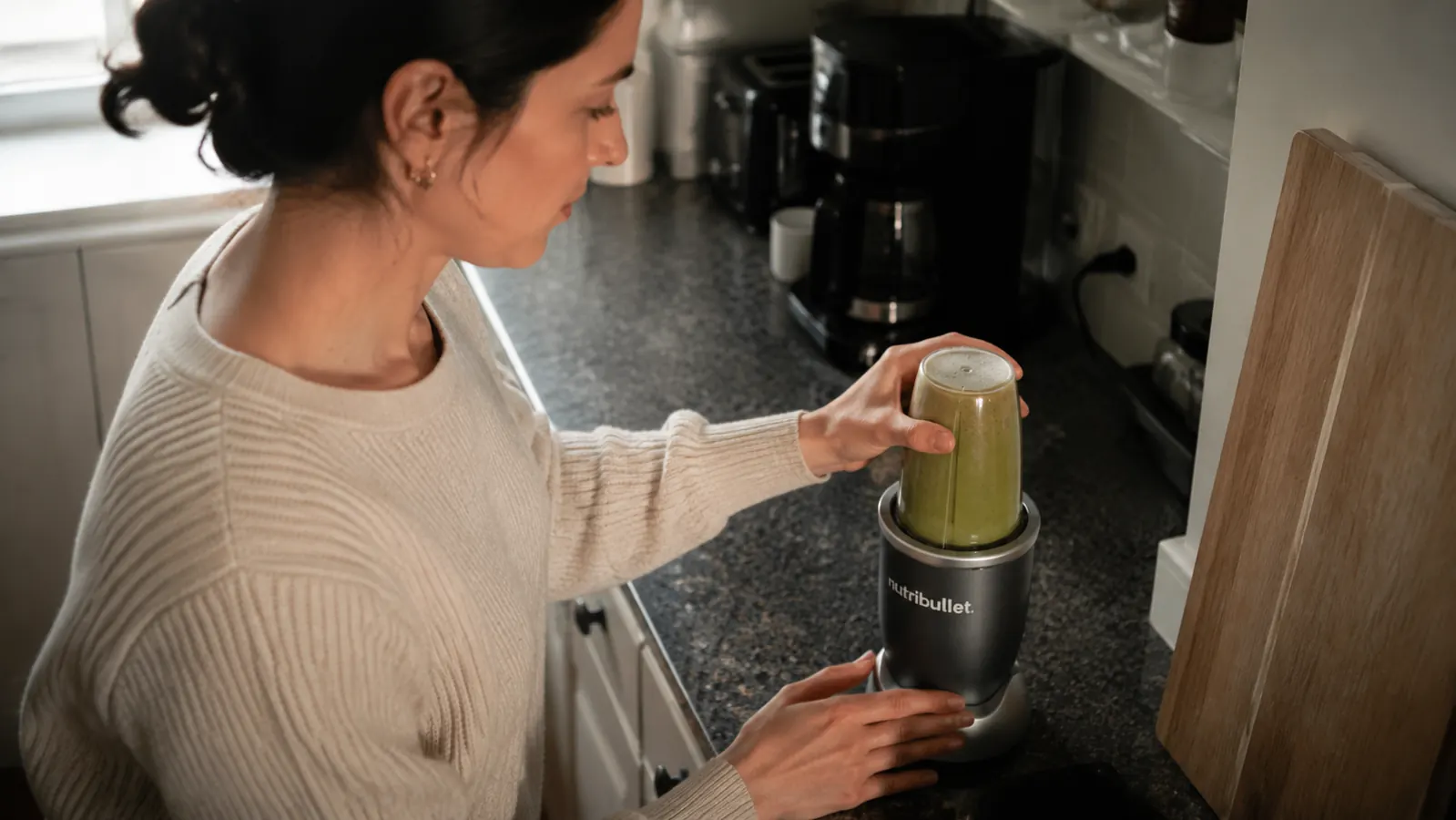
Cleanup in a Kitchen With One Sink Basin
Both machines use an extractable blade design where the blade assembly is part of the cup, not the base. This means the motor base never needs to be washed, only wiped. The cup and blade unit gets a rinse under the tap immediately after use, which takes about 20 seconds and handles 90 percent of smoothie residue. Thicker blends with peanut butter or avocado benefit from a quick soap wash, but still no soaking or disassembly beyond pulling the blade off the cup. Both are listed as dishwasher safe on the top rack.
One small but real advantage for the NutriBullet: the blade gasket tends to seal tighter over repeated uses. Ninja Fit cups are known to develop minor leaking around the blade gasket after several months, usually a slow seep rather than a gush, but enough to make a mess on the counter if you fill the cup too full. NutriBullet cups hold up more consistently through the first 12 months of daily use.
Who Should Buy Which
Buy the NutriBullet 600 if you blend most mornings, you want cups you can seal and store in the fridge, you care about keeping the counter as clear as possible, and you want a machine that holds up to 12 months of daily use without blade gasket issues. The 12-piece set gives you enough cups that the machine integrates into a real routine rather than just surviving it. At 4.5 stars across nearly 27,000 reviews, it is not a sleeper product, but the footprint and cup system genuinely suit small kitchens better than the specs alone suggest.
Buy the Ninja Fit if you mostly blend frozen fruit and want maximum motor power at the lowest cost, if cup volume is not a concern because you already drink from your own bottle, or if you are outfitting a dorm room or vacation rental where the blender gets light occasional use. The Ninja is a real blender, not a budget toy, and the motor advantage is legitimate on tough frozen loads. The smaller cups and louder operation are the real reasons it loses here, not the motor.
26,000+ small-kitchen cooks picked this one. Here is why the footprint math works.
The NutriBullet NBR-1201 includes two tall cups, one short cup, flip-top lids, and a motor base with a 4.7-inch square footprint that fits where nothing else does. See current pricing on Amazon before it changes.
Amazon Check Today's Price on Amazon →