
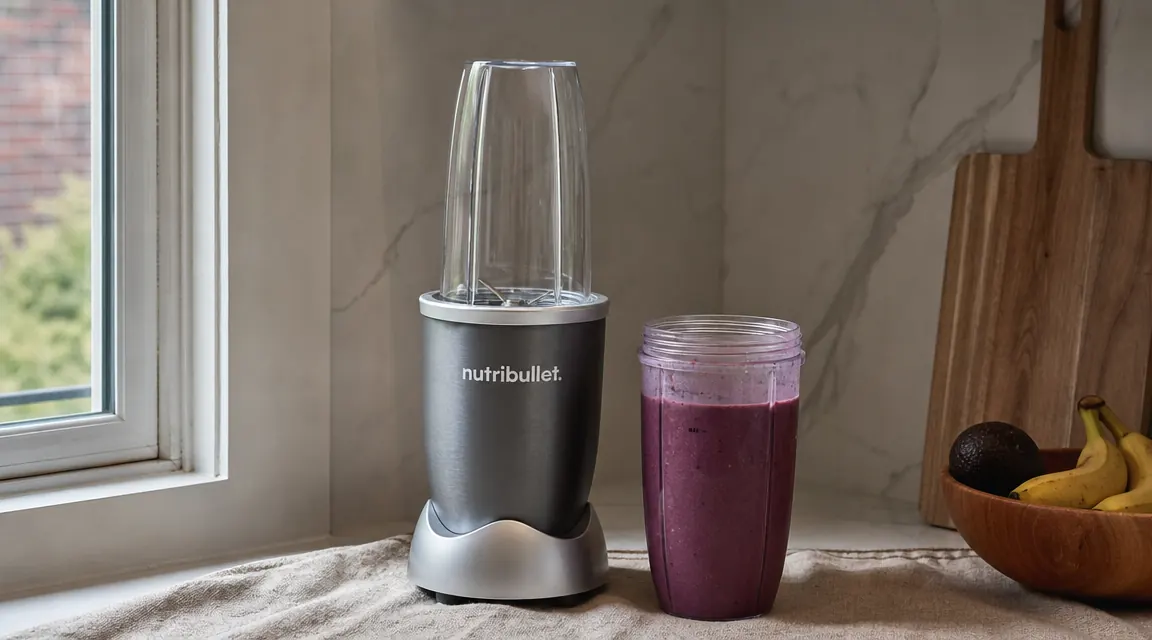
My kitchen counter is 28 inches wide between the refrigerator and the wall. I measured it the week I moved into this apartment in March 2024, standing there with a tape measure, wondering what I could realistically keep out permanently. The NutriBullet NBR-1201 600-watt blender was the first thing I put back on the counter after that measuring session. Its motor base is just under 7 inches wide and about 6 inches deep. It fit, and it earned its spot. Twelve months later, having blended something in it every single morning, I have a lot to say.
This is not a first-week impressions review. I am writing this after using the NutriBullet 600 roughly 360 times across a full calendar year. I have blended frozen spinach, frozen mango, protein powder, nut butter, oats, flaxseed, and ice. I have leaned on the tall 24-oz cup on weekday mornings when I have 4 minutes before I have to leave. I have used the smaller flat blade for grinding flaxseed and coffee. I dropped the cup once. I replaced one gasket. I want to give you the full picture.
The Quick Verdict
After a year of daily use, the NutriBullet 600 is still the right blender for a small kitchen. The 600-watt motor handles frozen fruit and leafy greens without complaint, the 7-inch footprint earns permanent counter real estate, and cleanup takes under 30 seconds. The one thing that will eventually frustrate you: the gasket on the blade assembly needs replacing around the 6-month mark, and the locking tabs on the older cups show wear. Both are cheap to fix, but they require knowing the fix exists.
Amazon Check Today's Price →If your counter is smaller than a carry-on suitcase, this blender makes the math work.
The NutriBullet NBR-1201 12-piece set includes two cups, two lids, a flat blade for grinding, and an extractor blade for smoothies. Check today's price before the set changes.
Amazon Check Today's Price on Amazon →How I've Used It
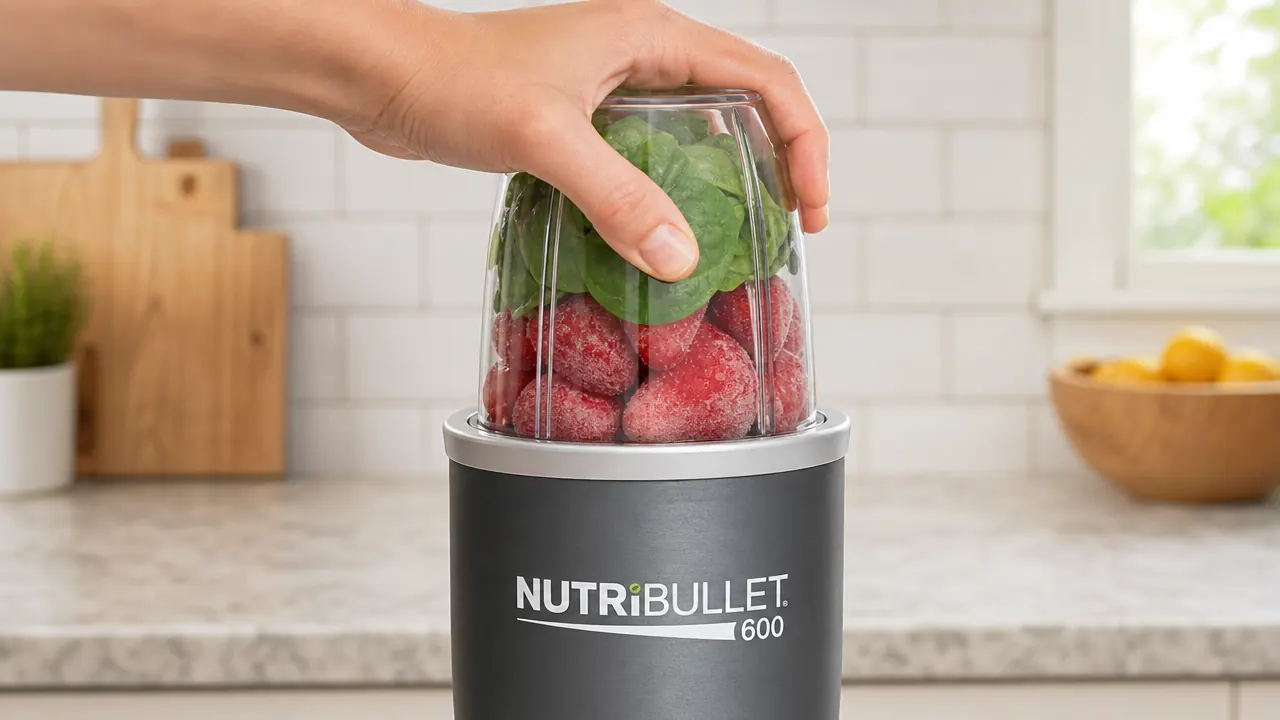
My morning routine is consistent to the point of being almost ritualistic. I wake up, fill the 24-oz cup with a handful of frozen mixed berries, a handful of baby spinach, a scoop of protein powder, a tablespoon of almond butter, and about 10 ounces of oat milk. I lock the extractor blade onto the cup, flip it onto the motor base, and press down for about 45 seconds. The result is a completely smooth, drinkable smoothie. I drink it out of the same cup, so there is no extra glass to wash.
On weekends, I use it differently. I have made cold brew concentrate by grinding coffee beans with the flat milling blade, then poured it through a filter. I have made a small batch of hummus by adding cooked chickpeas and tahini to the cup. I have blended soups after cooking them in my single-burner induction cooktop. These are the edge-case uses. The daily use is always the smoothie.
I live in a one-bedroom apartment in a building where the kitchens were clearly designed as an afterthought. I have one outlet on the kitchen wall, shared between the microwave and whatever else I want to plug in. The NutriBullet draws 600 watts, which is a manageable load. I have never tripped a breaker running it alongside the refrigerator, which is the only outlet-sharing situation I actually deal with.
Motor and Power: Does 600 Watts Hold Up?
The number that concerns most people before they buy is 600 watts. Countertop blenders from Vitamix and Blendtec run at 1200 to 1800 watts, and that wattage comparison can make the NutriBullet 600 feel underpowered. After a year of daily use, my honest read is that 600 watts is sufficient for everything a single-serving blender needs to do, provided you understand the technique.
The key is ingredient order. If you put a solid block of frozen mango directly against the blade, the motor will struggle. If you put oat milk in first, then add the frozen fruit on top so there is a liquid layer at the blade, it processes in under a minute without any grinding or hesitation. I learned this in the first week. Every smoothie since has been smooth.
What the 600-watt motor genuinely cannot do: crush ice cubes. Frozen fruit is fine. Ice cubes from a tray will kill the blade gasket faster than anything else and will occasionally stall the motor. I use frozen fruit instead of ice and have had no issues. If you want to crush ice regularly, you want a higher-wattage blender. That is a real limitation worth naming.
The motor has shown no signs of degradation after 12 months. It still engages at the same speed it did on day one. NutriBullet motors are designed for short-burst operation, typically 45 to 60 seconds per blend, not continuous running. If you hold it down for 2 full minutes every morning, you will eventually shorten the motor's life. Forty-five to sixty seconds is the functional ceiling for daily use.
After 360 blends, the motor sounds exactly like it did the first week. The technique matters more than the wattage.
The Gasket Problem: What Nobody Tells You Up Front
Around month six, I noticed a thin ring of smoothie residue appearing on the outside of the blade assembly after blending. Specifically, it appeared on the rubber gasket that sits inside the blade ring and creates the seal between the blade and the cup. The gasket had started to compress and lose its seal integrity.
This is the most common long-term maintenance issue with the NutriBullet 600, and it almost never comes up in first-week reviews. The gasket is a small rubber ring, roughly the width of a wedding band. It costs a few bucks for a pack of four on Amazon and takes 10 seconds to replace. The replacement gaskets sold for the NutriBullet 600 are labeled as NBR-1201 compatible, and the fit is exact.
The signs to watch for: a faint smell of rubber after blending, visible smoothie residue on the blade threads after blending, or any slight dripping when you flip the cup upside down onto the base. If you see these, replace the gasket before you have a full smoothie leak on your counter. I did not catch mine fast enough and had one memorable morning where a small amount of liquid found its way out. It was not a flood, but it was enough to motivate me to order the replacements that same day.
Cup Wear, Lids, and the 12-Piece Set
The NBR-1201 comes as a 12-piece set. In practice, the pieces you use daily are: the motor base, the extractor blade assembly, the 24-oz tall cup, and the handled lip ring that lets you drink directly from the cup. The flat milling blade and the short 18-oz cup see less regular rotation.
After a year, the cups show wear in a specific way. The plastic around the threading on the rim, where the blade assembly screws on, has developed micro-scratches from daily assembly and disassembly. Visually this is minor. Functionally it does not affect performance. The lip ring lid has held up without any issue. I have dropped the tall cup once from about three feet onto a tile floor and it did not crack.
The to-go lids that come in the set are flip-top lids with a drinking spout. I use them when I blend at home and walk out the door. They seal well enough to carry the blender cup in a bag without spilling. I would not trust them in a bag with a laptop on a bumpy train ride, but for walking a few blocks, they are fine.
One legitimate cup complaint: the printed measurements on the side of the cup fade with repeated dishwasher cycles. By month four, the measurement marks were difficult to read. I now eyeball my ingredient amounts, which I would have done anyway, but if you care about precise recipes, handwashing the cups preserves the markings longer.
Cleaning in a Small Kitchen
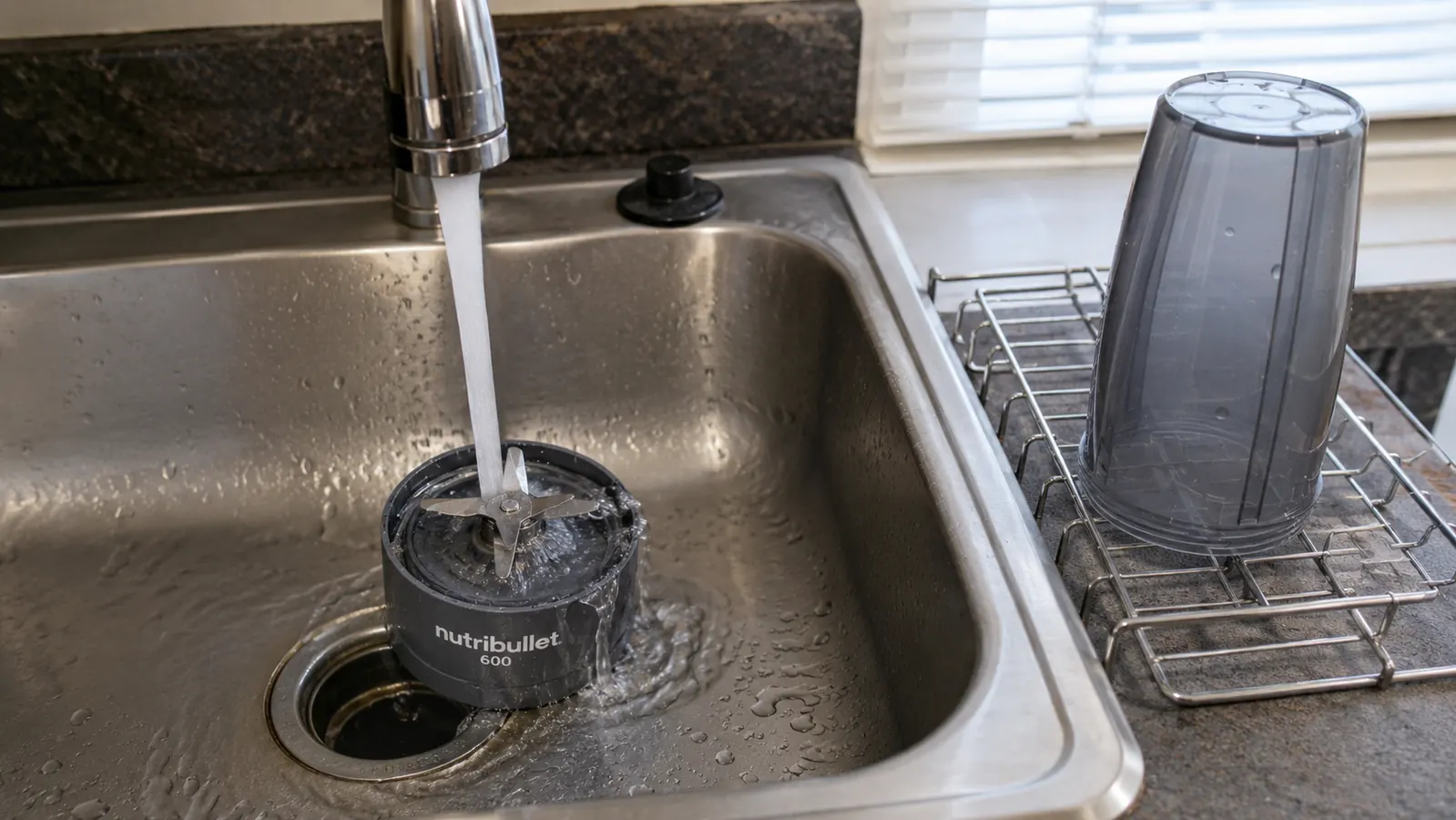
The NutriBullet 600 cleans faster than any blender I have ever owned, including a previous personal blender from a competing brand. After blending, I remove the blade assembly, rinse it under the tap, add a small drop of dish soap to the cup, fill it a third with warm water, reattach the blade, and run it for 10 seconds. Then I rinse everything under the tap. The whole process takes under 30 seconds.
The blade assembly is the only part that requires attention. The four-prong extractor blade has gaps between the prongs where protein powder and nut butter can collect. A quick pass with a small brush, the kind that comes in a bottle-brush set, clears these out completely. I keep a small brush in my dish rack specifically for this purpose. It has become a zero-friction part of my morning.
The motor base never goes near water. I wipe it down with a damp cloth once a week. After a year it looks almost new. The only cosmetic wear is a slight scuff on the rubber base foot from sliding it on the counter, which does not affect anything.
Counter Footprint: The Real Measurement That Matters
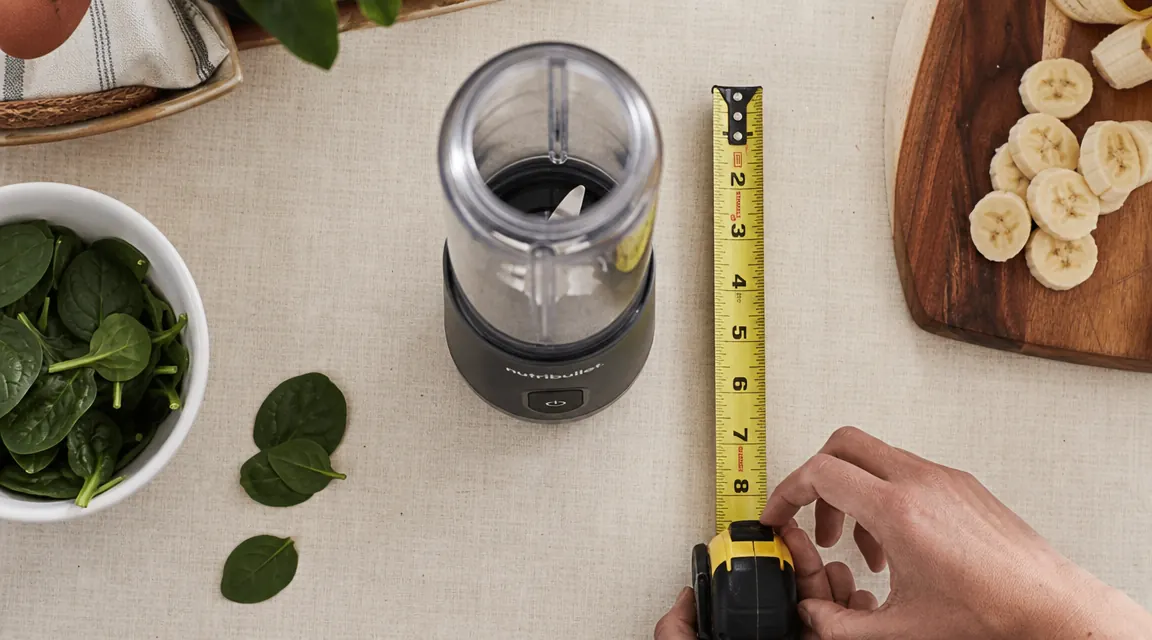
The NutriBullet 600 motor base measures 6.3 inches wide and 5.9 inches deep. The assembled unit with a cup in place stands 15 inches tall. That height matters if you have low cabinets directly above your counter, which is common in older apartment kitchens. Measure your under-cabinet clearance before buying.
My under-cabinet clearance is 14 inches. The blender does not fit under the cabinet when a cup is in place. My workaround is storing it with the cup off and the blade assembly beside the base. With the base alone, the height is under 7 inches. I store the cups in a cabinet directly above and grab one when I need it. This is a 3-second routine and adds no friction to my morning.
For comparison, a standard full-size blender base like a Vitamix 5200 is approximately 8.5 inches wide, 7 inches deep, and 21 inches tall assembled. That difference in depth alone, 6 inches versus 7 inches, is significant on a counter where every inch is allocated. The NutriBullet 600 fits in spots where a full-size blender cannot, and that is the central case for owning one in a small kitchen.
Noise: The Apartment-Wall Reality
The NutriBullet 600 is not quiet. No personal blender at this price point is. On a typical 45-second blend cycle, it runs at a high-pitched motor whine that is audible through the wall in a shared building. If you live in a condo with thin walls and your kitchen is adjacent to a bedroom, blending at 6am will be noticed by whoever is sleeping.
My practical solution is to blend no earlier than 7am on weekdays and 8am on weekends. If you need truly quiet blending, the NutriBullet 600 is not the answer. There are quieter personal blenders, like the BlendJet 2, though those are battery-powered and sacrifice some blending power. The tradeoff is real and worth naming.
What I Liked
- Motor base is 6.3 inches wide, fits comfortably in small counters with room to spare
- 600 watts handles frozen fruit and leafy greens reliably with correct ingredient layering
- Cleanup takes under 30 seconds, no parts require soaking
- Drink-from-the-cup design means zero extra glasses to wash
- 12-piece set includes two cups, two blades, and to-go lids at a price that beats most alternatives
- Motor shows zero performance degradation after 360 uses across 12 months
- Extractor blade is sharp enough to handle raw nuts and nut butters in small quantities
Where It Falls Short
- Gasket wears out around the 6-month mark with daily use and must be replaced
- Cannot crush ice cubes without accelerating blade wear
- 15 inches tall when assembled requires 15+ inch under-cabinet clearance
- High-pitched motor noise at 45 seconds is audible through apartment walls
- Cup measurement markings fade with regular dishwasher use after 3-4 months
- Not rated for continuous blending beyond 60 seconds, limits use for hot soups or extended blending tasks
Who This Is For
The NutriBullet 600 is the right blender for someone who makes one or two single-serving drinks daily, has fewer than 10 inches of counter depth to give a blender, and does not want to buy replacement parts or troubleshoot a complex machine. If your use case is a smoothie in the morning and maybe a protein shake after a workout, this covers it completely and costs less than a full-size machine that would take up three times the counter real estate. It is also a strong fit for dorms, where counter space is shared and storage is nearly nonexistent, and for RV kitchens where the vibration from the road means you want a simple, robust design.
Who Should Skip It
If you regularly make large batches, the 24-ounce maximum cup size will frustrate you. Blending for two people means two separate cycles, back to back. If you want to crush ice, margarita-style, plan on replacing gaskets more frequently or look at a higher-wattage option. If noise is a hard constraint because of building rules, a shared bedroom wall, or a sleeping infant, the 600 watt motor will be too loud for early-morning use. And if you have the counter space and the budget for a full-size blender, a machine like the Vitamix Explorian at 1400 watts will give you more power, larger batch capacity, and longer motor longevity, though it will occupy more than double the counter footprint.
A year later, I still reach for this blender every morning without thinking twice.
The NutriBullet NBR-1201 12-piece set ships with everything you need to start: extractor blade, milling blade, tall cup, short cup, handled lip ring, and to-go lids. Check today's price and current availability on Amazon.
Amazon Check Today's Price on Amazon →