
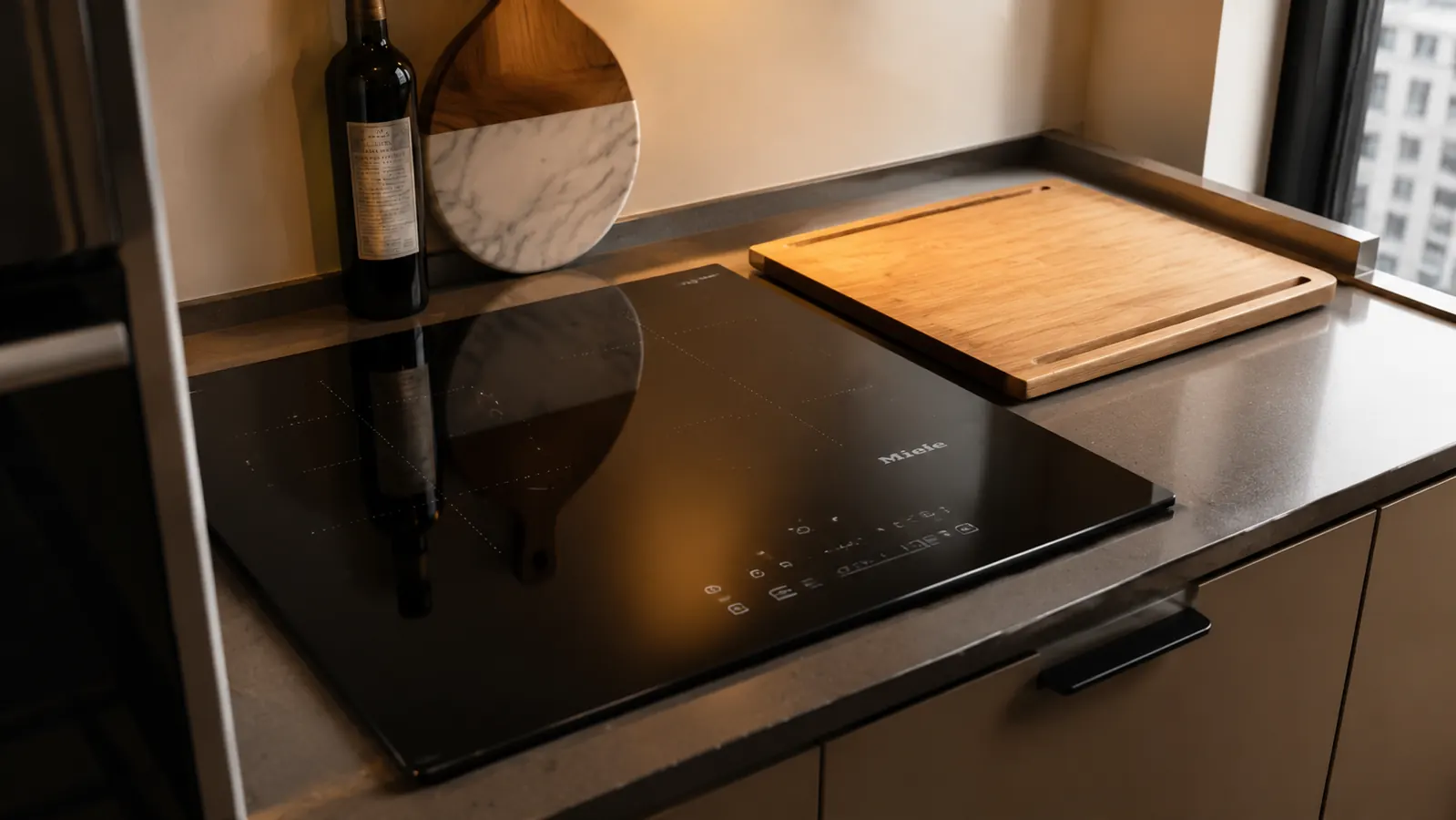
My Brooklyn apartment has electric resistance burners that take three minutes to boil water and another two to admit defeat and cool down. When my lease renewed last fall, I measured the gap between my microwave cart and the toaster: 13 inches. I needed one decent cooking surface that would take up less real estate than a laptop, and I needed it to actually work. I bought the Duxtop 9100MC 1800-watt portable induction cooktop in late May of last year, and I have cooked on it nearly every weeknight since. This is what 12 months of real use looks like.
Before I get into the details, the short version: the Duxtop 9100MC is a genuinely capable portable burner that earns its counter space for anyone in a no-gas apartment. It is not perfect. The fan noise is real, the power cord is just long enough to be annoying, and you will need to check every pan you own before the first cook. But for a budget-friendly single-burner setup, it performs at a level that surprised me after a full year of use.
The Quick Verdict
A reliable, space-efficient induction burner that handles real weeknight cooking for one or two people. Minor gripes about fan noise and cord length, but nothing that makes me want to swap it out after a year.
Amazon Check Today's Price →If your electric burners are slow and your gas is nonexistent, the Duxtop 9100MC is the burner you've been putting off buying.
Over 9,000 verified ratings, 1800 watts of real cooking power, and a footprint that fits on a corner of any counter. Check the current price and availability on Amazon before restocking delays hit.
Amazon Check Today's Price on Amazon →How I've Used It
My setup: a 550-square-foot apartment with a galley kitchen, two electric resistance coil burners, and zero gas access. I am a solo cook who makes real food four to five nights a week. Typical weeknight involves boiling pasta or grains on one surface while something else does its thing in the toaster oven. I added the Duxtop as a third cooking surface and almost immediately started using it as my primary surface, pushing the coil burners to backup duty.
Over 12 months I have used the Duxtop for pasta water, sauteed aromatics, reduced sauces, fried eggs, pan-seared chicken thighs, reheated soups, and two ill-advised attempts at caramelizing onions that revealed everything about its temperature control at the low end. I have also cooked a full pot of dal twice a week for several months running. It has been a workhorse, not a novelty.
The unit measures 11.4 by 14.2 inches and sits at 2.5 inches tall. That footprint is real, and it fits exactly where I measured. It draws from a standard 120-volt outlet and the cord runs 5.5 feet, which is almost enough but not quite. Depending on outlet placement, you may be cord-stretching the first few weeks until you rearrange your counter layout.
The Cookware Compatibility Reality Check
This is the piece nobody talks about in the first week but everyone learns by month two. Induction cooking requires magnetic cookware, full stop. If a magnet sticks to the bottom of your pan, you are fine. If it does not, the cooktop will display an error code and refuse to heat. I lost two pans to this test: an aluminum saute pan I had owned for four years and a ceramic-coated skillet that I genuinely liked. Neither had a magnetic base.
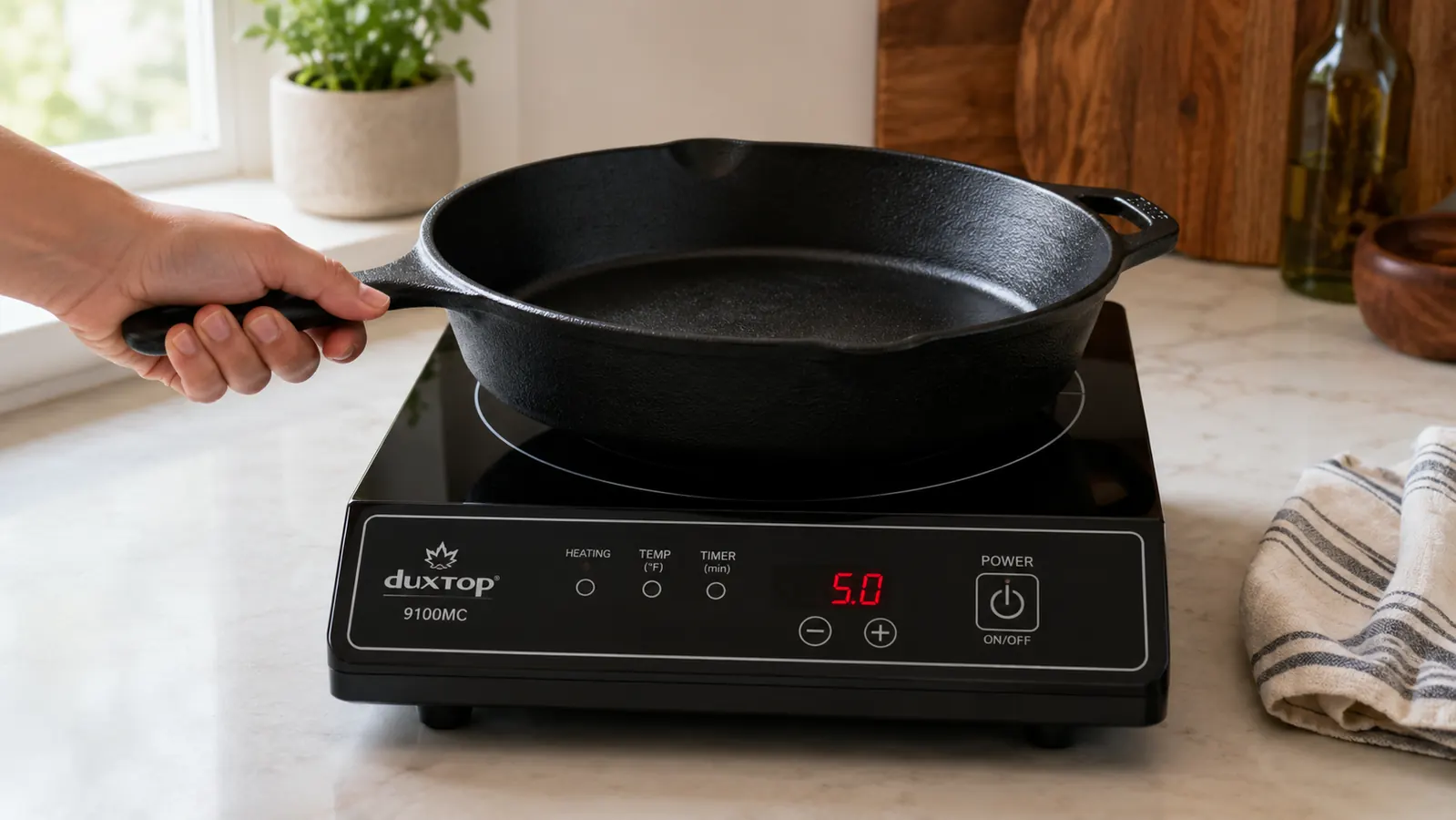
What works without any issues: cast iron (my 10-inch Lodge skillet is my go-to surface for anything that needs serious heat), stainless steel cookware with a magnetic bottom, and any pot or pan explicitly labeled induction-compatible. What does not work: aluminum, copper, pure ceramic, and non-magnetic stainless. I replaced the two incompatible pans with an induction-ready stainless skillet and haven't had an issue since. The lesson is to do a magnet test before your first cook, not after.
Heat Responsiveness: Where Induction Actually Earns Its Reputation
The most noticeable thing about cooking on induction for the first time is how quickly the pan responds when you adjust the heat. On a resistance coil, turning the dial down from high to medium-low means waiting 90 seconds for the element to cool. On the Duxtop, the response is nearly immediate because the cookware itself is heating, not the surface underneath it. When I lower from power level 8 to level 4, the simmer stabilizes in under 15 seconds. For anyone who has scorched a pasta sauce by not reacting fast enough to a coil burner, this alone justifies the switch.
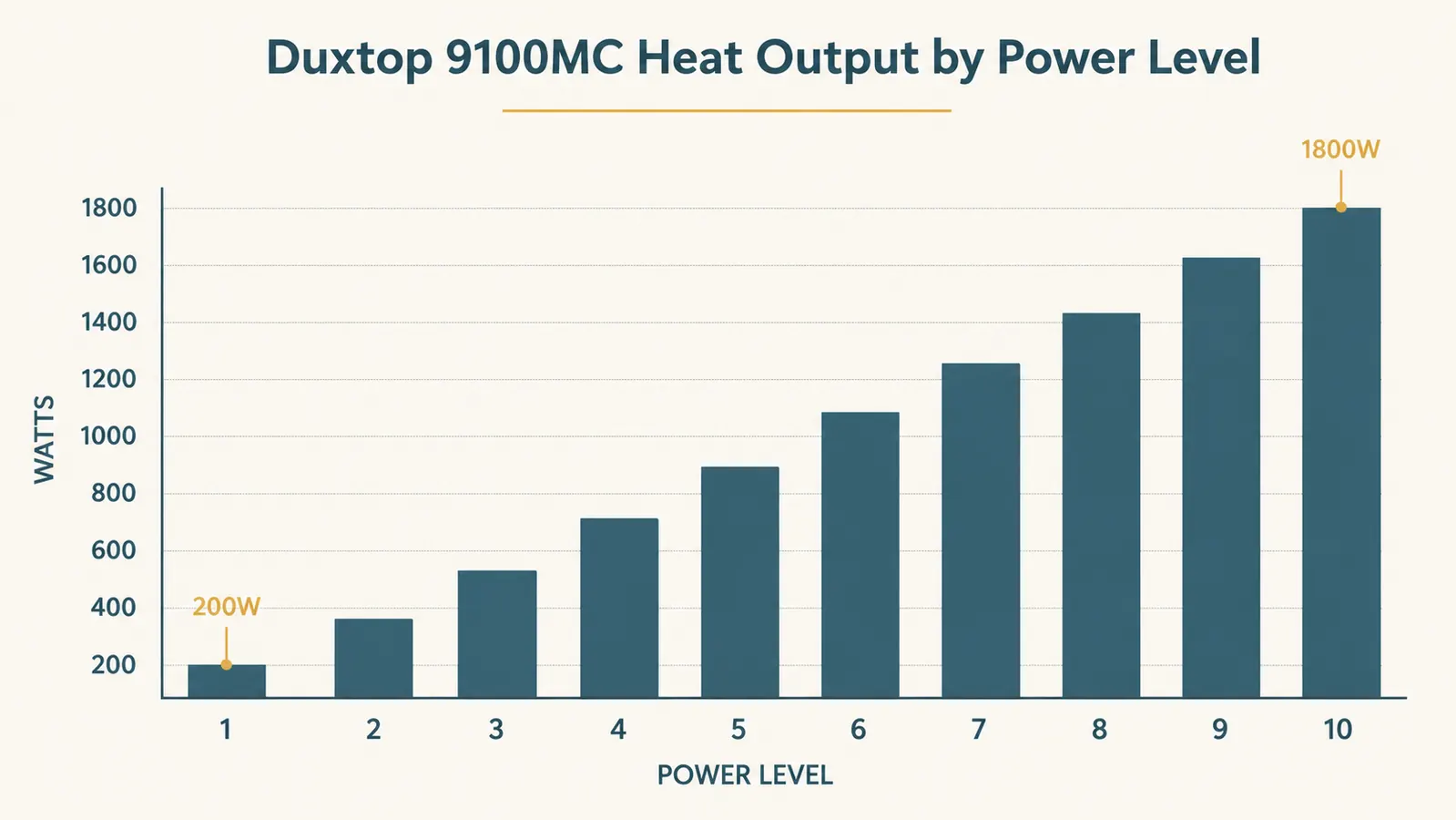
The 9100MC offers 10 power levels ranging from 200 watts to 1800 watts, and also has a temperature mode that lets you set specific targets from 140 to 460 degrees Fahrenheit. In practice I use power levels for everything except chocolate melting, where the temperature setting gives me the precision to stay below the threshold where chocolate seizes. The top two power levels bring a 4-quart pot of water to a full boil in roughly eight minutes from cold tap. That is faster than either of my apartment's resistance coil burners.
On an electric coil, turning down from high to medium-low means waiting 90 seconds for the element to cool. On the Duxtop, the response takes under 15 seconds. That single difference changed how I cook on weeknights.
The Low End: Where Things Get Honest
The Duxtop's power level 1, at 200 watts, is the weakest link in the setup. When I tried to caramelize onions low and slow, I found that the burner cycles on and off at that wattage rather than maintaining a true low steady simmer. The result is uneven, intermittent heat that browns onions in spots while leaving others underdeveloped. For a proper long caramelization I now use my toaster oven with the broil-off bake setting, which gives me more consistent gentle heat over a long period.
Power level 3 (around 600 watts) is where I land for a real low simmer, and that works well for holding a soup at temperature or reducing a sauce slowly. If you cook a lot of long-braise dishes or slow-cooked sauces, just plan on level 3 as your floor rather than level 1. The middle of the range, levels 4 through 7, is where the Duxtop is most reliable and where I spend about 70 percent of my cooking time.
Noise, Safety, and 12-Month Durability
The Duxtop has a built-in cooling fan that runs during and for a short period after cooking. In a quiet kitchen, it is audible. It is not loud enough to compete with a range hood or background music, but if you are cooking in silence at 10pm and your apartment is otherwise still, you will notice it. I have adapted to it without issue, but it is worth knowing if fan noise in a small space bothers you.
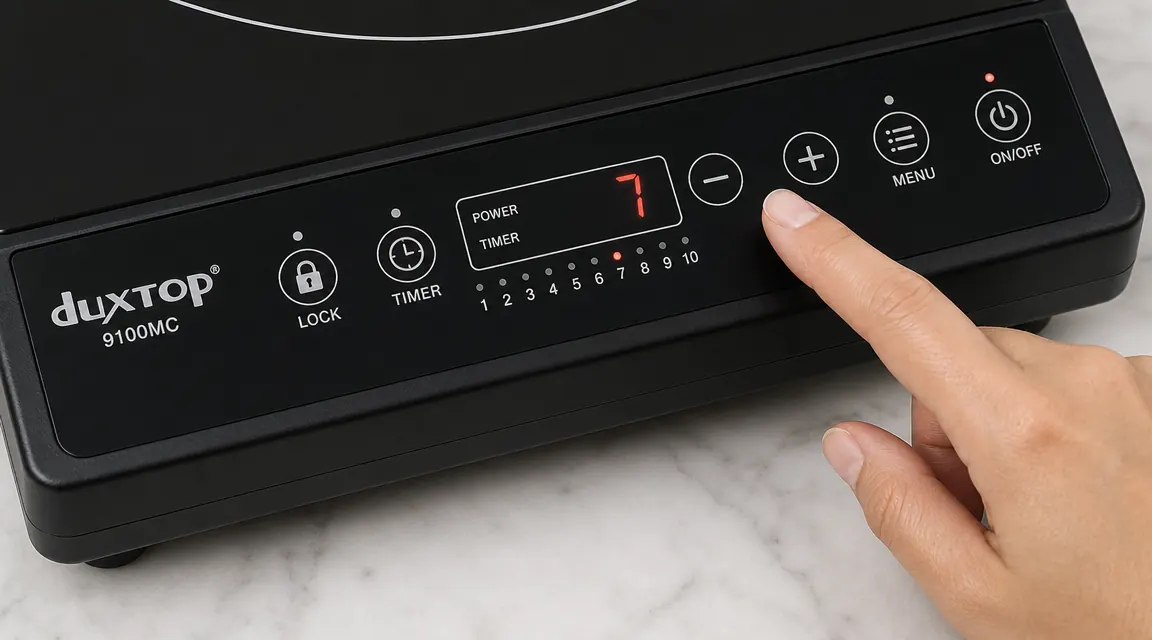
Safety features that matter in an apartment: the cooktop surface does not get hot except where the pan makes contact, so accidental burns from touching the glass are much less likely than with a coil or gas burner. There is an automatic shut-off if no cookware is detected within 60 seconds of activation, which I trigger regularly when I forget to put a pan down before pressing start. There is also a child-lock setting, which I use as a general lockout when the unit is not in active use. After 12 months of regular cooking, the touch panel is still fully responsive and the glass surface has no cracks or discoloration.
One practical durability note: I have moved the unit from the counter to a cart and back probably 40 times over the year. The unit weighs 6.1 pounds and has a built-in carry handle on the back edge. It has not developed any rattles, wobbles, or electrical issues. The LED display is still crisp. For a budget appliance that lives on a counter and gets used daily, that is a solid result.
Cleanup and Counter Coexistence
Because induction heats the pan and not the surface, spills that land on the glass cook top do not bake on. A boiled-over pasta starch that would cement itself to a coil burner grate wipes off the Duxtop glass with a damp cloth. I clean the surface after most uses and it has never needed more than a soft cloth and mild dish soap. No scrubbing, no soaking, no grease traps to disassemble.
The sides and base of the unit collect kitchen grease like any counter appliance, but the flat underside is easy to wipe. The cord doesn't have a cord wrap, so I coil it loosely and tuck it behind the unit when not in use. That is a small design gripe that a cord clip or velcro wrap solves in five seconds.
What I Liked
- Boils water faster than apartment electric coil burners
- Instant heat response when adjusting power levels mid-cook
- Cool-to-touch glass surface reduces burn risk in a small kitchen
- Easy wipe-down cleanup, no baked-on spills
- Compact 11.4 x 14.2 footprint fits in tight counter gaps
- Auto shut-off and child lock for apartment safety
- Durable over 12 months of daily use with no degradation
Where It Falls Short
- Power level 1 cycles on and off rather than holding a true low simmer
- Fan noise is noticeable in a quiet apartment kitchen
- Power cord is 5.5 feet, which is just short enough to cause layout issues
- Requires magnetic cookware, may force replacing existing pans
- Single burner only, requires sequencing for multi-component meals

What I Cook Most Often and How It Performs
A year of weeknight cooking in a small apartment has a pretty consistent rotation. Pasta, grain bowls, stir fry, soups, and eggs cover probably 80 percent of what I actually make. The Duxtop handles all of them competently. Boiling pasta water at level 9 or 10 is fast. Sauteing aromatics at level 6 gives me a good brown on onions and garlic without burning them. Stir fry at level 8 is aggressive enough to get some wok-style high heat going in a flat-bottom stainless pan. Fried eggs at level 5 in my cast iron set every time without any sticking.
The one area where I reach for something else is anything that benefits from a gentle, sustained low heat over a long time. Slow-cooking a curry for 40 minutes works fine at level 3, but the cycling on the lowest levels means I don't fully trust it for something like tempering chocolate in a double boiler where temperature precision matters most. For everything else in a normal weeknight rotation, it has not let me down once in 12 months.
Who This Is For
The Duxtop 9100MC makes the most sense if you are in an apartment or rental with electric coil burners and you want a faster, more responsive cooking surface without paying for a full cooktop replacement. It also works well as a supplemental burner when your primary surface only has one functioning element, or when you want a dedicated burner in a different part of the kitchen than where your stove lives. If you already have induction-compatible cookware, there is almost no friction in getting started. If you have to replace one or two pans, factor that cost in before you buy.
Who Should Skip It
If you cook multi-burner meals every night and need two simultaneous high-heat surfaces, a single portable burner will require more coordination than you may want. The sequencing approach works, but it takes some adjustment if you're used to cooking everything at once. Also, if your kitchen outlet situation puts you more than five feet from your prep surface, the cord length will be a daily frustration. And if you are heavily invested in aluminum or copper cookware, budget for replacements or look at a traditional electric burner instead of induction.
For more on how induction stacks up against other portable burner options, see our side-by-side on the Duxtop vs NuWave comparison. And if you're still on the fence about whether a portable induction cooktop fits your cooking style, the 10 reasons induction beats gas for small kitchens covers the practical case without the sales pitch.
A year in, I wouldn't trade the Duxtop 9100MC for my apartment's original coil burners. Not even close.
Responsive heat, a cool-to-touch surface, and a footprint smaller than a sheet pan. If your current cooking setup is slowing you down, this is the upgrade that costs less than most pots and takes up less space than a cutting board.
Amazon Check Today's Price on Amazon →